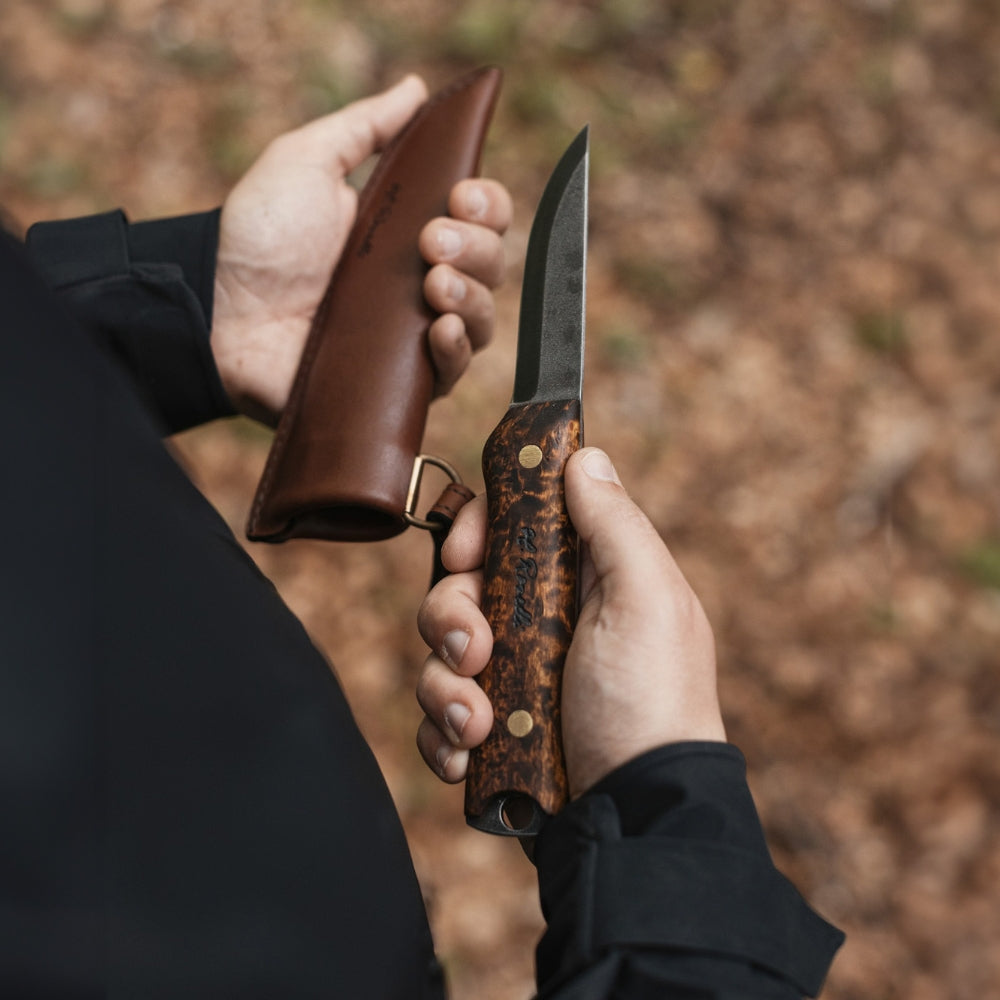


なぜブレードの製造工程が重要なのか
一見すると、2本のナイフのブレードは同じに見えるかもしれません。
形も同じ。鋼材も同じ。切れ味も同じ。
しかし、ブレードがどのように作られているかによって、その性能は決まります。
それは使い始めた直後だけでなく、数ヶ月、数年と使い続けた後にこそ違いとして現れます。
本記事では、切断や打ち抜きによって形状が作られるブレードと、その後ドロップハンマー鍛造によってさらに仕上げられるブレードの違いについて解説します。
その違いは一見すると分かりにくいかもしれませんが、時間の経過とともに明確になります。

レーザーカットと鍛造ブレードの違いとは?

切断・打ち抜き:形状を作る工程
鋼板からブレードを切断または打ち抜く方法は、ナイフの基本的な形状を効率的に作り出す手法です。
その結果は精密で均一性があり、再現性にも優れています。多くのナイフでは、この工程で製造が完結します。
切断や打ち抜きのみで作られたブレードでも、鋭く、十分な性能を発揮することは可能です。
しかし、鋼の内部構造は、元の鋼板の状態から大きく変化していません。
形状は整えられているものの、強度や靭性、そして長期的な刃持ちを最適化するための加工は施されていないのです。
切断や打ち抜きはブレードの形を決めますが、その性能や経年での特性までを決定するものではありません。

鍛造:鋼を活かす工程
Roselliでは、これはプレミアム・カーボンスチールナイフにおける出発点にすぎません。
ブレードの形状が整えられた後、加熱され、ドロップハンマーによる鍛造が行われます。
力強い打撃を何度も加えることで、鋼は圧縮され、より緻密に鍛え上げられていきます。
これは単なる外観上の処理ではなく、実際の使用性能に直接影響を与える、意図的な冶金的プロセスです。
ドロップハンマー鍛造の過程では、素材はより高密度になり、結晶構造は微細化され、鋼内部の繊維組織が整えられます。
特に刃先にかけて密度が高まり、より優れた特性が生まれます。
その結果、より高い強度と安定性、そして優れた耐久性を備えたブレードが完成します。
ここで、ブレード本来の特性が生み出されるのです。
では、実際にはどのような違いがあるのでしょうか。
切断や打ち抜きのみで作られたブレードと、ドロップハンマー鍛造されたブレードの違いは、最初は分かりにくいかもしれません。
しかし、使い続けることでその差ははっきりと現れてきます。
ドロップハンマー鍛造されたブレードには、次のような特長があります。
・刃先の安定性が高い
・研ぎ直しまでの切れ味が長く持続する
・優れた靭性を備えている
・刃全体にわたり、より均一な熱処理と硬度分布が実現されている
これは、新品の状態での性能ではなく、実際に使い込んだときに現れる性能の違いです。

では、なぜこの製法がすべてのナイフで採用されているわけではないのでしょうか。
それは、時間がかかるからです。
ドロップハンマー鍛造には、経験と素材への深い理解、そして手作業による丁寧な工程が求められます。
作業は決して速くはなく、大量生産にも適していません。
一本一本のブレードに、細やかな配慮が必要です。
だからこそ、私たちはこの方法を選び続けています。

性能へと導く、異なる道
プレミアム・カーボンスチールとウルトラハイカーボンスチール(UHC)の違い
まず明確にしておきたい点があります。ドロップハンマー鍛造が適用されるのは、当社のプレミアム・カーボンスチールナイフです。
一方、ウルトラハイカーボンスチール(UHC)は、極めて高い硬度と優れた刃持ちを実現するために開発された、まったく異なる製造プロセスを採用しています。
この鋼材は、独自の特性と要求、そして製造方法を持っています。
UHCスチールとプレミアム・カーボンスチールはいずれもRoselli独自の鋼材であり、実用を前提に設計されていますが、その性能に至るアプローチは異なります。
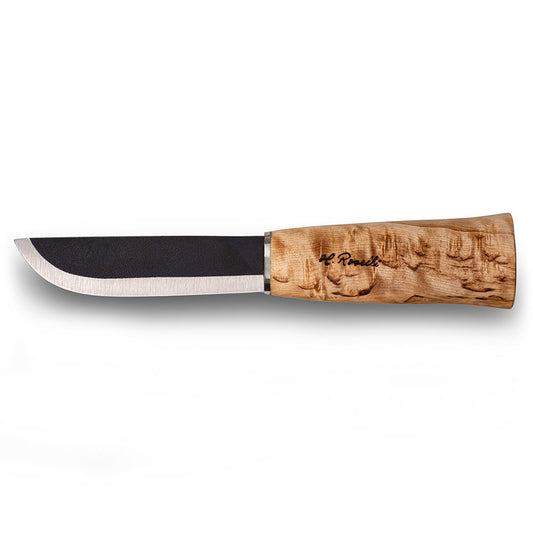
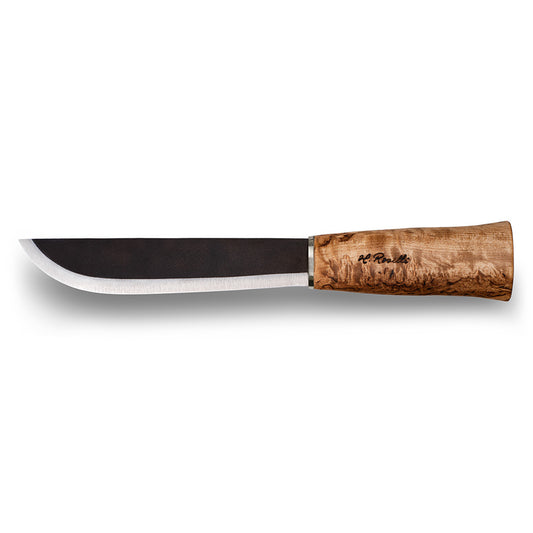
画像では、同じ状態から始まった2本のブレードをご覧いただけます。
一方は形状が整えられ仕上げられたもの、もう一方はドロップハンマーによる鍛造工程を経たものです。
その違いは形状ではなく、鋼がどのように加工されているか、そして長期的にどのような性能を発揮するかにあります。
消耗品ではなく、道具として
Roselliでは、これまで一度も大量生産を目指してきませんでした。
私たちが作るのは、使い捨てられるナイフではありません。
使い込まれ、研ぎ直され、使用の跡が刻まれながら、長く信頼して使い続けられる道具を作っています。
だからこそ、目に見えない部分にも手間を惜しみません。
同じ鋼材でも、より多くの工程を経て、妥協を減らす。
Roselliのプレミアム・カーボンスチールナイフは、長く使い続けるために鍛えられています。
一生ものの一本です。
鍛造ブレードの魅力を知る
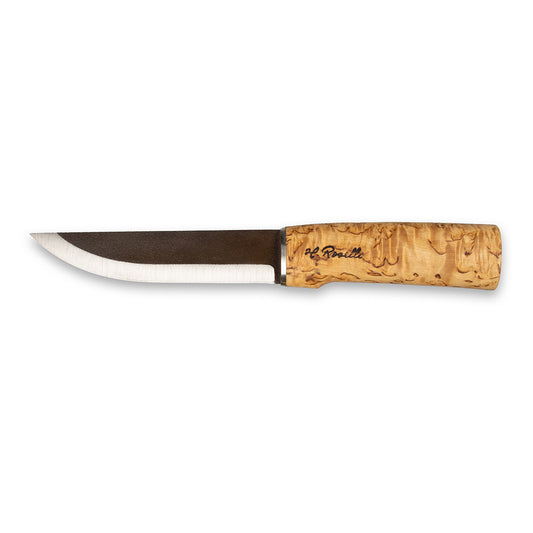
-
ハンティングナイフ(ロングブレード)
通常価格 ¥29,200通常価格単価 あたり -
グランドファーザーナイフ
通常価格 ¥22,500通常価格単価 あたり
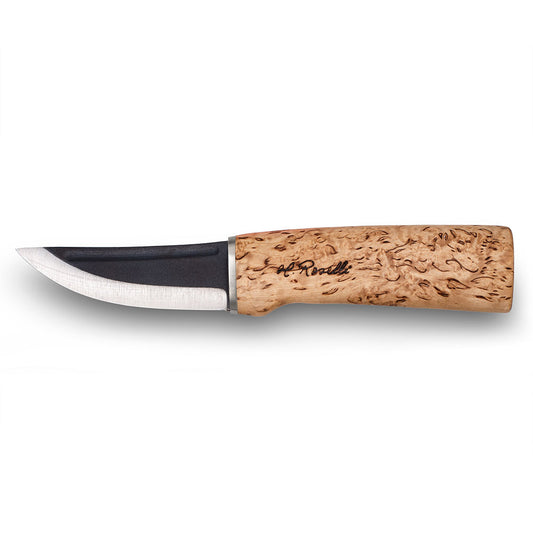
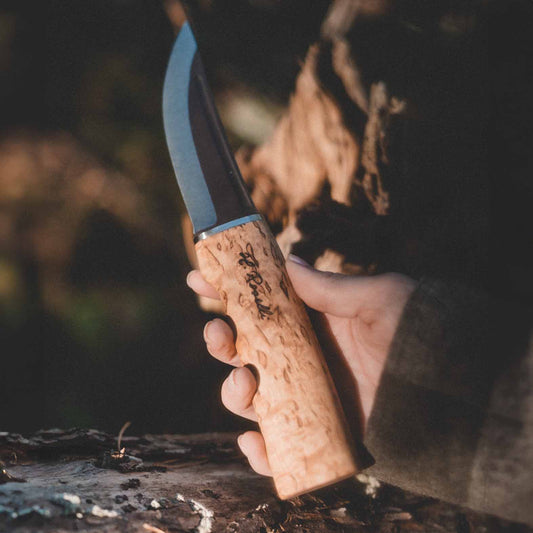
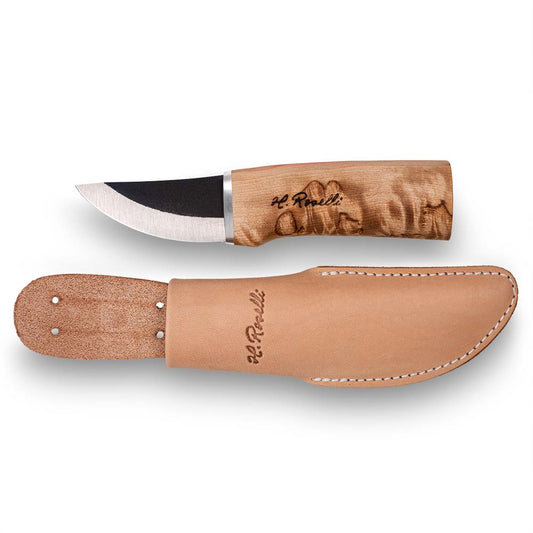
-
グランドマザーナイフ
通常価格 ¥17,500通常価格単価 あたり -
リトル・カーペンターナイフ
通常価格 ¥14,200通常価格単価 あたり -
スモール・レウクナイフ
通常価格 ¥33,200通常価格単価 あたり -
ビッグ・レウクナイフ
通常価格 ¥35,000通常価格単価 あたり